The most disturbing thing about a crime is not always the act itself.
Sometimes it is the realization that the mind behind it does not look monstrous at all.
People often describe a crime story as disturbing because of the act itself. A murder. A violent confrontation. A moment where something irreversible happens. But sometimes what unsettles us far more is not the act, but the mind behind it.
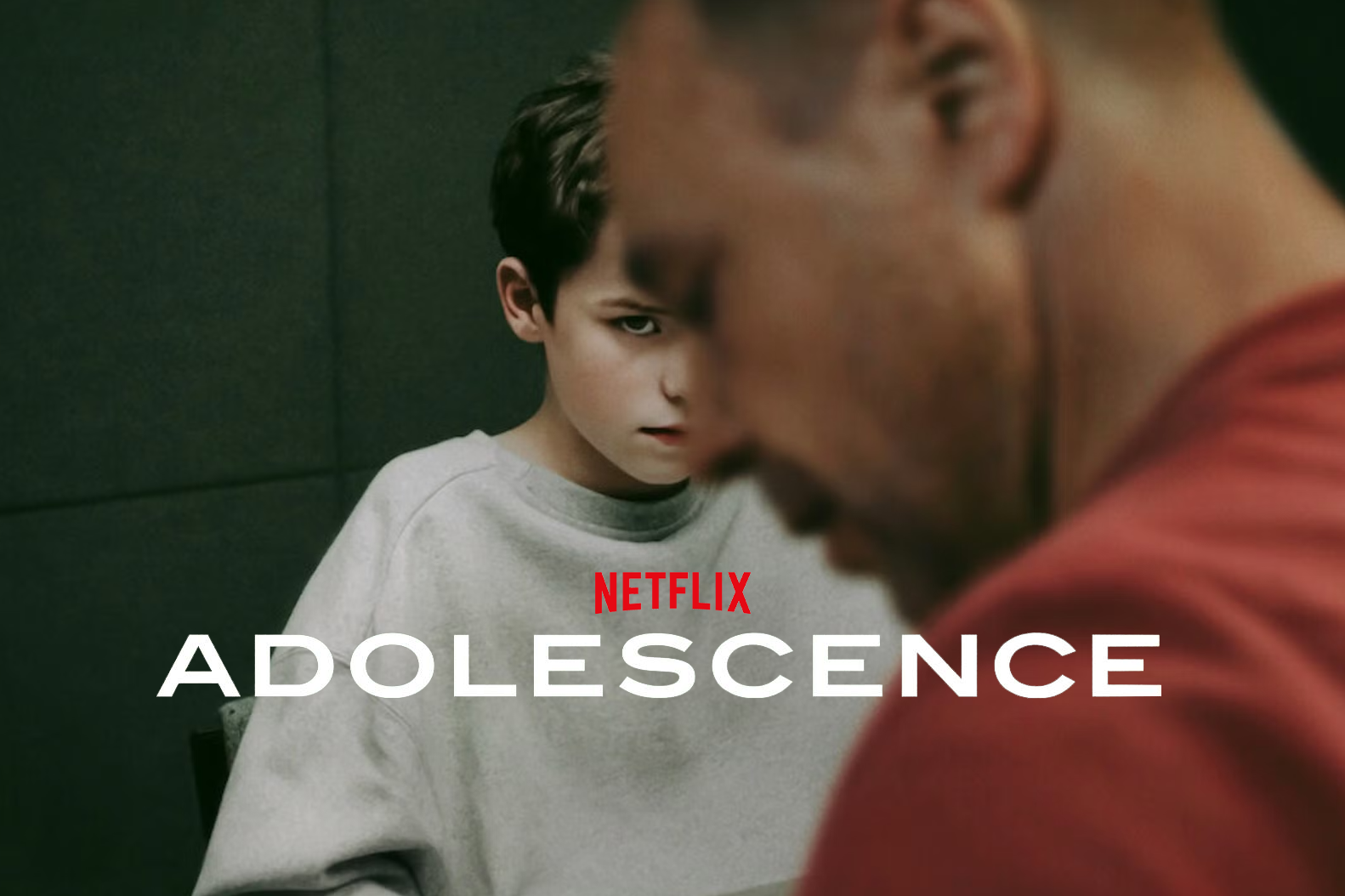
That is what makes Adolescence so difficult to shake off after watching it. The story refuses to let the viewer hide behind the comfortable distance of a traditional crime thriller. It does not obsess over clues or clever plot twists. Instead, it forces the audience to sit with a much more uncomfortable question: why did he do it?
And the answer, when it slowly reveals itself, is not monstrous. It is something far more tragic.
Jamie is not portrayed as a villain in the traditional sense. He is awkward, insecure, searching for his place in the world. He is a teenager trying to understand what it means to be a man in a culture that sends him contradictory messages every day. Watching him talk about how he sees himself, how he believes women perceive him, and what he thinks masculinity should look like is painful because it feels disturbingly familiar. Not necessarily in the details, but in the emotional structure beneath them.
Adolescence is the stage of life where identity is fragile and unfinished. It is the period where a person is constantly measuring themselves against others, trying to figure out where they stand in the invisible hierarchy of social life. Am I attractive enough? Confident enough? Respected enough? Masculine enough? For boys in particular, those questions often become tied to a very narrow set of signals. Strength. Confidence. Sexual success. Dominance. These are the markers that society repeatedly frames as proof of masculinity. But what happens when a teenager feels he possesses none of them?
Jamie’s struggle throughout the story seems to revolve around that question. He does not see himself as powerful, desirable, or respected. Instead, he experiences himself as invisible. And invisibility, especially during adolescence, can feel unbearable. Developmental psychologists often describe adolescence as a period of heightened social evaluative sensitivity, where peer approval becomes one of the most powerful forces shaping self-worth.
Humans are social creatures. Being ignored by the group registers in the brain almost like physical pain. Humiliation adds another layer to that pain – the feeling that everyone else can see your place in the hierarchy, and that place is near the bottom.
We are wired to crave recognition, acknowledgement, some confirmation that we matter in the social landscape around us. Neuroscientists have even found that social rejection activates brain regions like the anterior cingulate cortex, which are also involved in processing physical pain. When that recognition does not arrive through positive channels, the mind sometimes searches for other ways to obtain it.
Anger becomes one of those ways. Anger has a strange psychological power. It demands attention. When someone becomes visibly angry, the entire emotional atmosphere of a room shifts. People stop ignoring them. They look. They react. They respond. Even if the response is negative, the person has achieved something crucial: they are no longer invisible.

For someone who feels powerless, anger can become a performance of strength. Anger does something recognition never quite managed to do for him: it forces the world to pay attention. A way to signal dominance when other forms of status feel unattainable. It is not necessarily a conscious strategy, but it is a pattern that psychologists have observed repeatedly in social behaviour.
The show hints at this dynamic in subtle ways. Jamie talks about respect, about how people look at him, about what it means to be seen as a man. Underneath those words is a deeper emotional current: humiliation. And humiliation is one of the most volatile emotions the human mind can experience.
Humiliation begins as shame. A feeling that one has been exposed, diminished, or rejected in the eyes of others. But shame rarely stays quiet for long. In many cases it transforms into anger. Anger allows the mind to move away from vulnerability and toward aggression. Instead of feeling small, the person feels powerful, even if only temporarily. Researchers studying aggression often refer to this transition as shame-rage conversion, where threatened self-esteem transforms into outward hostility.
This is where another element enters the story: bullying.
Jamie’s humiliation is not something that happens quietly in the privacy of his thoughts. It is amplified and broadcast through social media. Insults that might once have been spoken in a hallway now exist permanently on screens. They can be shared, repeated, laughed at, circulated among peers. Being called an incel, mocked for perceived weakness, ridiculed in front of an online audience, these experiences do not just sting. They reshape how a young person sees themselves. The humiliation becomes public. It becomes something that feels impossible to escape, creating a persistent social visibility.
Adolescence has always been a period where reputation matters intensely. But the digital environment has transformed reputation into something far more relentless. A cruel comment no longer disappears after a few minutes. It can linger, accumulate reactions, gather new viewers, return to haunt the person again and again. For someone already struggling with identity, that kind of environment can feel like a psychological trap.
And when humiliation is repeated often enough, the mind begins searching for explanations. Why is this happening to me? Why do people treat me this way? Why am I the one being mocked?
In earlier generations, those questions might have remained unresolved. Today, however, the internet is full of communities eager to provide answers. Some of those answers are thoughtful and supportive. Others are dangerously simplistic.
Jamie seems to encounter a version of the latter. Narratives about alpha males, dominance, and reclaiming respect appear to offer a framework for understanding his frustration. They transform personal rejection into a broader ideological story. The problem is no longer internal insecurity or social awkwardness. The problem becomes women, society, unfair hierarchies, a world that supposedly rewards the wrong kinds of men. For a confused teenager, these explanations can feel strangely comforting. They remove uncertainty. They convert pain into certainty. Instead of asking difficult questions about oneself, the blame is redirected outward.
But these narratives also encourage a particular emotional posture: resentment.
Resentment is powerful because it gives structure to anger. It turns diffuse frustration into a focused sense of injustice. And once someone begins interpreting their experiences through resentment, every new rejection feels like confirmation of the story. This pattern closely resembles confirmation bias, where people increasingly notice evidence that supports an existing belief while overlooking anything that contradicts it.
Jamie’s worldview slowly seems to move in that direction. His comments about women reveal a mixture of longing, confusion, and bitterness. He wants recognition from them, yet he also appears to believe they operate according to a system that automatically excludes him. That contradiction produces a deep psychological tension.
On one hand he wants connection. On the other he feels humiliated by the very idea that he needs it. In that emotional landscape, anger becomes one of the few remaining ways to reclaim a sense of agency. Anger says: I am not powerless. Anger says: I refuse to be ignored. Anger says: if I cannot receive admiration, I will command fear.
Watching Jamie articulate fragments of these beliefs is what makes the show so unsettling. Not because his ideas are unique, but because they echo patterns that exist far beyond the fictional story. Across many online spaces today, young men are exposed to content that frames masculinity as a constant struggle for dominance and validation.
These messages rarely encourage introspection. They rarely explore vulnerability, emotional literacy, or healthy relationships. Instead they reward displays of aggression, certainty, and control. They suggest that anger is proof of strength and that empathy is a form of weakness. For a teenager already wrestling with insecurity, such messages can become seductive. They promise clarity. They promise power. They promise a way to transform humiliation into dominance.
But what they often deliver instead is isolation.
The tragedy of Jamie’s character lies partly in this isolation. Beneath the anger and resentment is still a teenager who desperately wants to be understood. Someone who wants to feel valued. Someone who is trying to assemble an identity from fragments of advice, ridicule, and online ideology.
And that process unfolds in a world where algorithms often amplify the loudest and most extreme voices. Content that provokes outrage spreads faster. Messages that trigger strong emotions travel further. Slowly, the psychological environment surrounding adolescents begins to tilt toward intensity rather than reflection. The result is a generation navigating identity formation inside a digital landscape that constantly magnifies comparison, humiliation, and status anxiety.
Seen through that lens, the story of Adolescence stops feeling like an isolated crime narrative. It begins to resemble a case study in how modern environments interact with fragile identities.
Bullying contributes humiliation.
Social media amplifies it.
Online ideologies reinterpret it.
And anger emerges as the emotional outlet that seems to restore power.
None of these elements alone necessarily produce violence. Millions of teenagers experience rejection or bullying without harming anyone. But the story illustrates how multiple psychological pressures can accumulate inside a young mind that lacks guidance, emotional tools, or supportive relationships.
What makes the show linger in memory is the uncomfortable realization that Jamie is not simply a villain who appeared out of nowhere. He is the product of influences that exist all around us. Digital spaces where cruelty spreads easily. Cultural narratives that equate masculinity with dominance. Social systems that mock vulnerability while rewarding aggression.

The story does not offer easy solutions. Instead it leaves the viewer with a troubling question about the psychological environments we are collectively creating.
When adolescents search for identity today, what kinds of voices are they most likely to encounter?
Voices that teach them how to understand rejection, manage humiliation, and develop empathy?
Or voices that teach them to convert pain into resentment and resentment into anger?
The answer to that question may shape far more lives than we are comfortable acknowledging.
Perhaps the most unsettling realization is this: Jamie’s story is not simply about one troubled teenager. It is about the psychological ecosystems we are building around young minds. And ecosystems shape behaviour long before anyone realizes what is growing inside them. And by the time we finally notice what has grown there, it is often already too late.

Leave a Reply